This website is currently transitioning to a new platform. Some content may not be available until the move is complete. Use the contact form to ask about specific content.
Author, Historian
Thomas S. Bremer, Ph.D.
American Religious History and U.S. National Parks
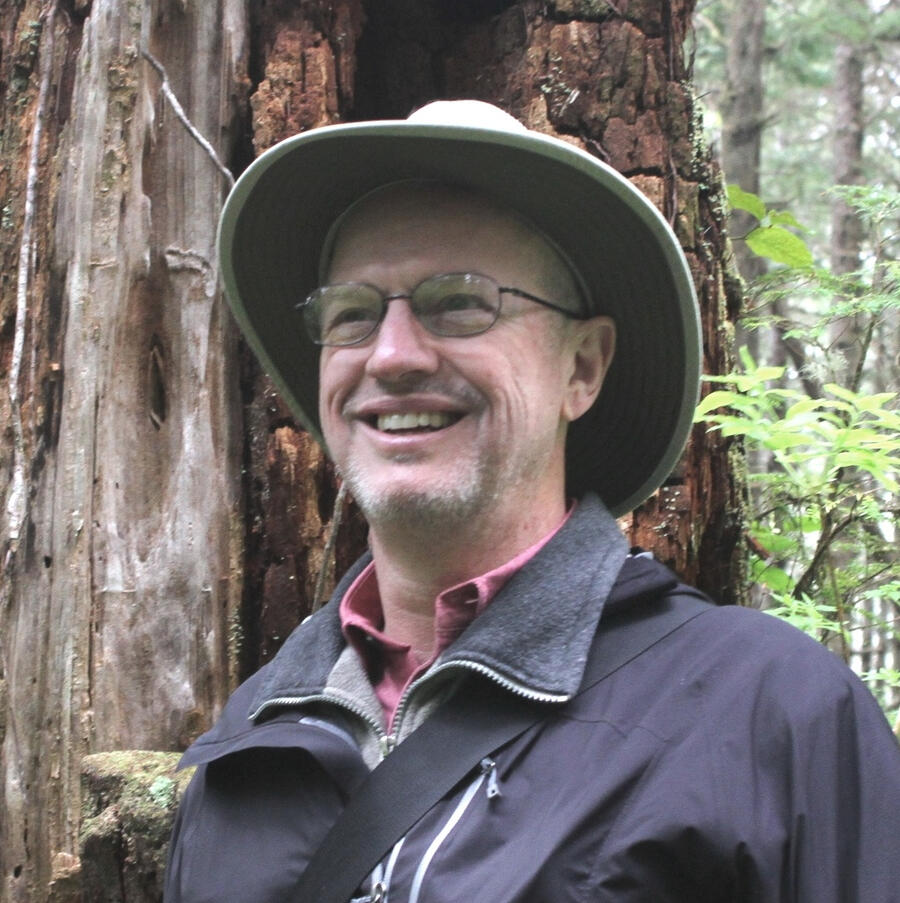
Thomas S. "Tom" Bremer writes about American religious history with special interests in religion and tourism, religion and nature, and U.S. national parks. He is Professor Emeritus of Religious Studies at Rhodes College in Memphis, Tennessee, where he taught courses in religious history for twenty-two years. Dr. Bremer has written three books as well as numerous other publications. He has served as a consultant for the National Park Service, and he writes the monthly Sacred Wonderland Newsletter. These days, he lives beside a pond near woods outside of Granville, Ohio.
This website is currently transitioning to a new platform. Some content may not be available until the move is complete. Use the contact form to ask about specific content.
Writings of Thomas S. Bremer


Books by Thomas S. Bremer
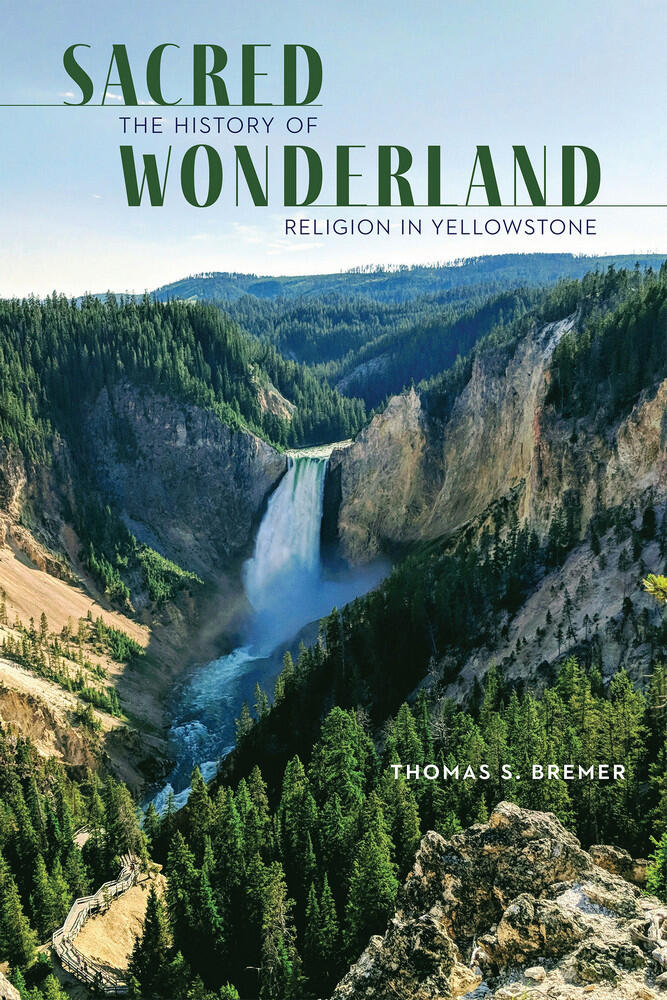
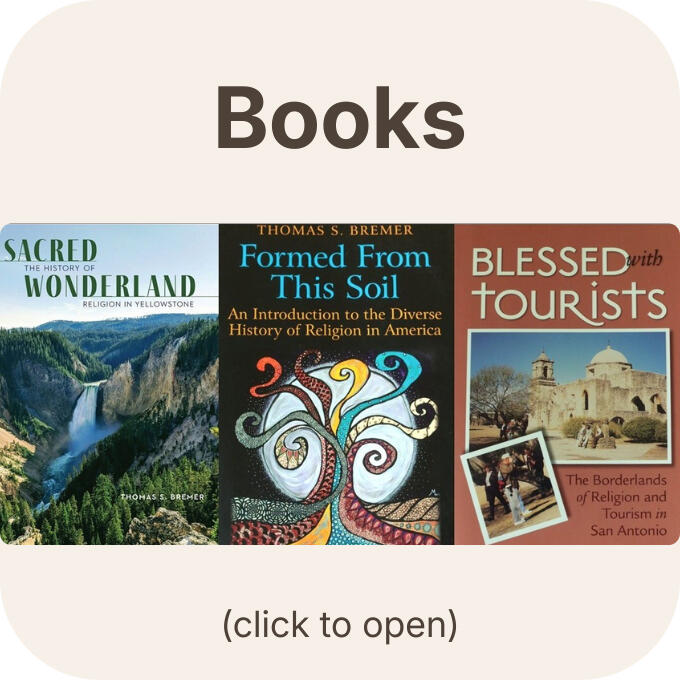
Sacred Wonderland: The History of Religion in Yellowstone (2025) tells the story of religion in Yellowstone National Park. It traces the religious aspects behind the meanings, purposes, and popularity of Yellowstone as the nation’s premier national park. Learn more …
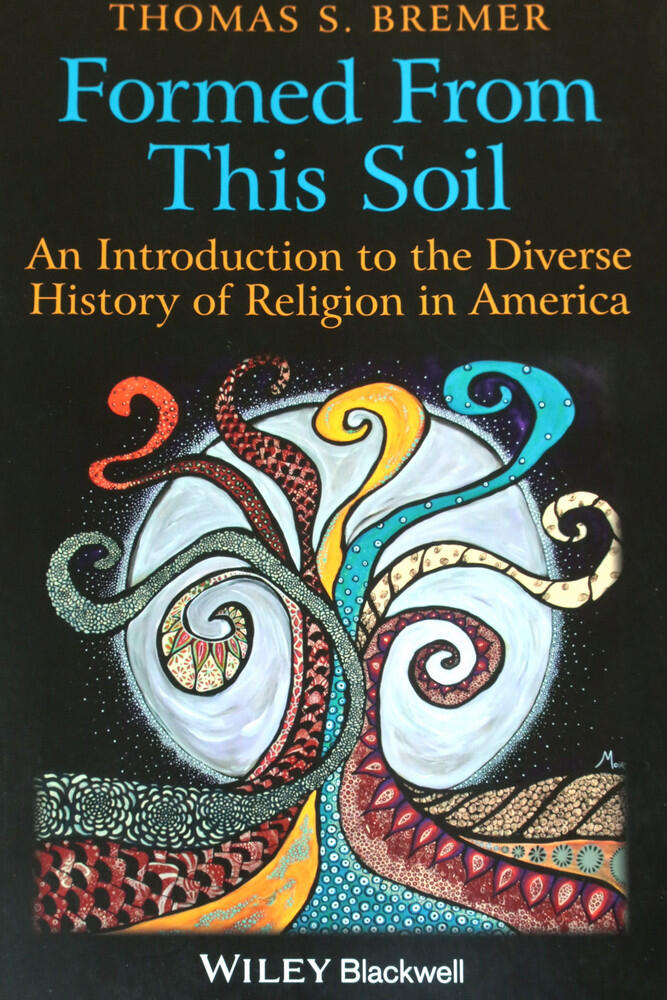
Formed from this Soil: An Introduction to the Diverse History of Religion in America (2014) tells the story of the diverse sacred traditions and practices found throughout American religious history. Readers learn a more inclusive story than the conventional tale of westward expansion and the triumph of Protestant Christianity. The book includes numerous “interpretive concepts” for readers to gain new perspectives on the history of America. Learn more. . .
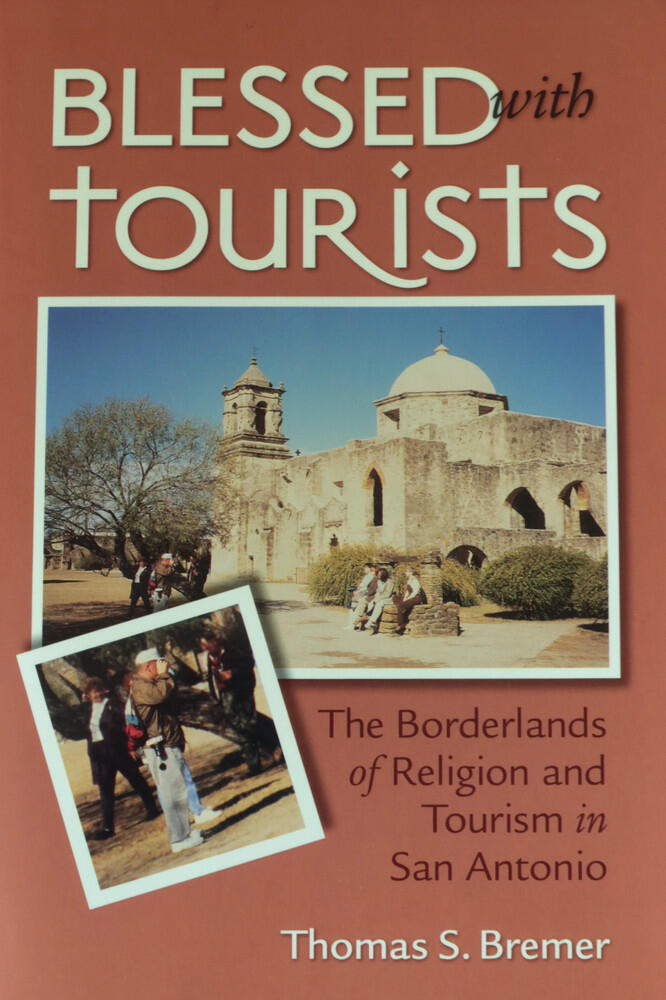
Blessed with Tourists: The Borderlands of Religion and Tourism in San Antonio (2004) recounts the history of San Antonio, Texas, as a travel destination. It begins with the early colonial period and goes through the twentieth century. The story includes chapters on the history of the Alamo as a tourist site, Hemisfair ’68, and on the San Antonio Missions National Historical Park. Learn more. . .
Other Publications by Thomas S. Bremer
The essays and other publications below are listed in reverse chronological order. You can use the Contact form to request any of these that you are unable to find or access.
“Every trail has a history: The Octagon Earthworks” in The Reporting Project (July 30, 2026).
“Every trail has a history: The Canal Lock Trail at Blackhand Gorge ” in The Reporting Project (April 22, 2026).
“Yellowstone has been a ‘sacred wonderland’ of spiritual power and religious activity for centuries – and for different faith groups,” in The Conversation (July 24, 2025).
“Op-Ed | Preserving America’s Best Idea: National Parks in The Fight for Democracy,” in National Parks Traveler (May 27, 2025).
“How reciting the Pledge of Allegiance became a sacred, patriotic ritual,” in The Conversation (June 11, 2024).
“In the worst of America’s Jim Crow era, Black intellectual W.E.B. Du Bois found inspiration and hope in national parks,” in The Conversation (December 15, 2023).
“In America, national parks are more than scenic − they’re sacred. But they were created at a cost to Native Americans,” in The Conversation (November 21, 2023).
“The Religious and Spiritual Appeal of National Parks,” in The Routledge Handbook of Religious and Spiritual Tourism, ed. Daniel Olsen and Dallen Timothy, Routledge (2021): 166-178.
“Black Robes and the Book of Heaven: When Christianity Went West,” in Church History and Religious Culture, volume 101 (2021): 80–100.
“Consider the Tourist,” in The Wiley Blackwell Companion to Religion and Materiality, ed. Vasudha Narayanan, Wiley-Blackwell (2020): 187-206.
“Acadia National Park: A Soul and Spirit Stretching Place,” in Chebacco: The Magazine of the Mount Desert Island Historical Society, volume XX (2019): 131-141.
“Worshiping at Nature’s Shrine” in Practical Matters Journal (April 8, 2016).
“The Modern Religiosity of the Newark Earthworks,” in The Newark Earthworks: Enduring Monuments, Contested Meanings, ed. Lindsay Jones and Richard D. Shiels, University of Virginia Press (2016): 198-212.
“A Touristic Angle of Vision: Tourist Studies as a Methodological Approach for the Study of Religions,” in Religion Compass, volume 8, issue 12 (December 2014): 371-379.
“Evangelical Park: Railroads, Profit, and Religion at Yellowstone,” in Ranger Magazine volume 30, number 2 (Spring 2014): 8-9.
“Tourism and Pilgrimage,” in Encyclopedia of Religion in America, ed. Charles Lippy and Peter Williams, CQ Press (2010).
“The Brother of Jesus in Toronto,” in Resurrecting the Brother of Jesus: The James Ossuary Controversy and the Quest for Religious Relics, ed. Bernadette McNary-Zak and Ryan Byrne, University of North Carolina Press (2009): 31-58.
“A Touristic Spirit in Places of Religion,” in Faith in America: Changes, Challenges, New Directions, Volume 2: Religious Issues Today, ed. Charles H. Lippy, Greenwood (2006): 37-57.
“Lorraine Motel,” in American Icons: An Encyclopedia of the People, Places, and Things that have Shaped Our Culture, ed. Dennis R. Hall and Susan Grove Hall, Greenwood (2006): 419-424.
“Sacred Spaces and Tourist Places,” in Tourism, Religion, and Spiritual Journeys, ed. Dallen Timothy and Daniel Olsen, Routledge (2006): 25-35.
“Tourism and Religion,” in The Encyclopedia of Religion, Second Edition, vol. 13, Editor in Chief Lindsay Jones, Macmillan Reference (2005): 9260-64.
“Reading the Sahagún Dialogues,” in Sahagún at 500: Essays on the Quincentenary of the Birth of Fr. Bernardino de Sahagún, ed. John Frederick Schwaller, Academy of American Franciscan History (2003): 11-29.
“Il Genius Loci Ignotus di Eranos e la Creazione di un Luogo Sacro,” in Eranos, Monte Veritá, Ascona, ed. E. Barone, M. Riedl, and A. Tischel, Edizioni ETS, Pisa, Italy (2003): 71-76.
“Tourists and Religion at Temple Square and Mission San Juan Capistrano,” in Journal of American Folklore, volume 113, issue 450 (Fall, 2000): 422-35.
“Pilgrimage,” “San Juan de los Lagos, Nuestra Señora de,” “Talpa, Nuestra Señora del Rosario de,” and “Zapopan, Nuestra Señora de,” in The Oxford Encyclopedia of Mesoamerican Cultures, ed. Davíd Carrasco, Oxford University Press (2000).
“Sacrificial Slaughter and Dressing Up: Gender Articulations in Muslim Rituals,” in Religious Studies Review, volume 22 (July, 1996): 209-13.
This website is currently transitioning to a new provider. Some content may not be available right now but may return once the move is complete. Additional essays will be added here in the future. Use the contact form to ask about specific content.
Online Essays by Thomas S. Bremer

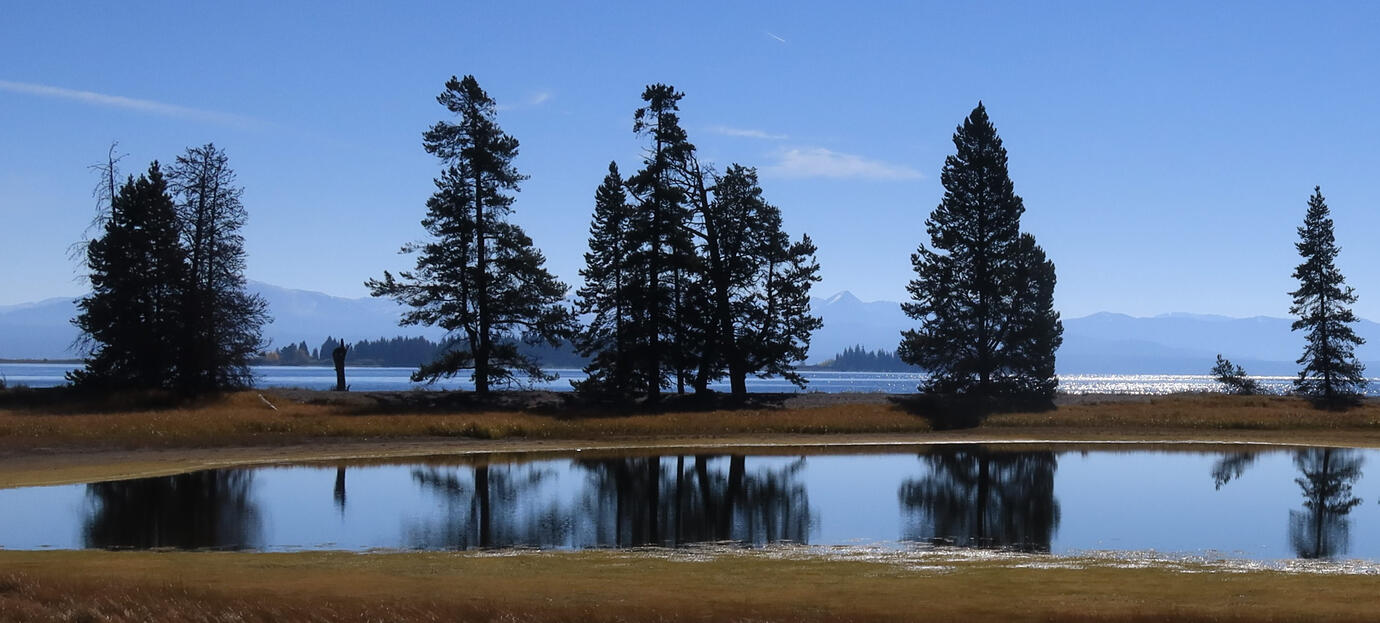
Personal Story
I started life in Illinois, but my young parents carried me away to California when I was still an infant. Though not exactly a native, my roots were in Orange County, California, which was more rural during my childhood than it is now. I left, however, as a young adult and have rarely returned.
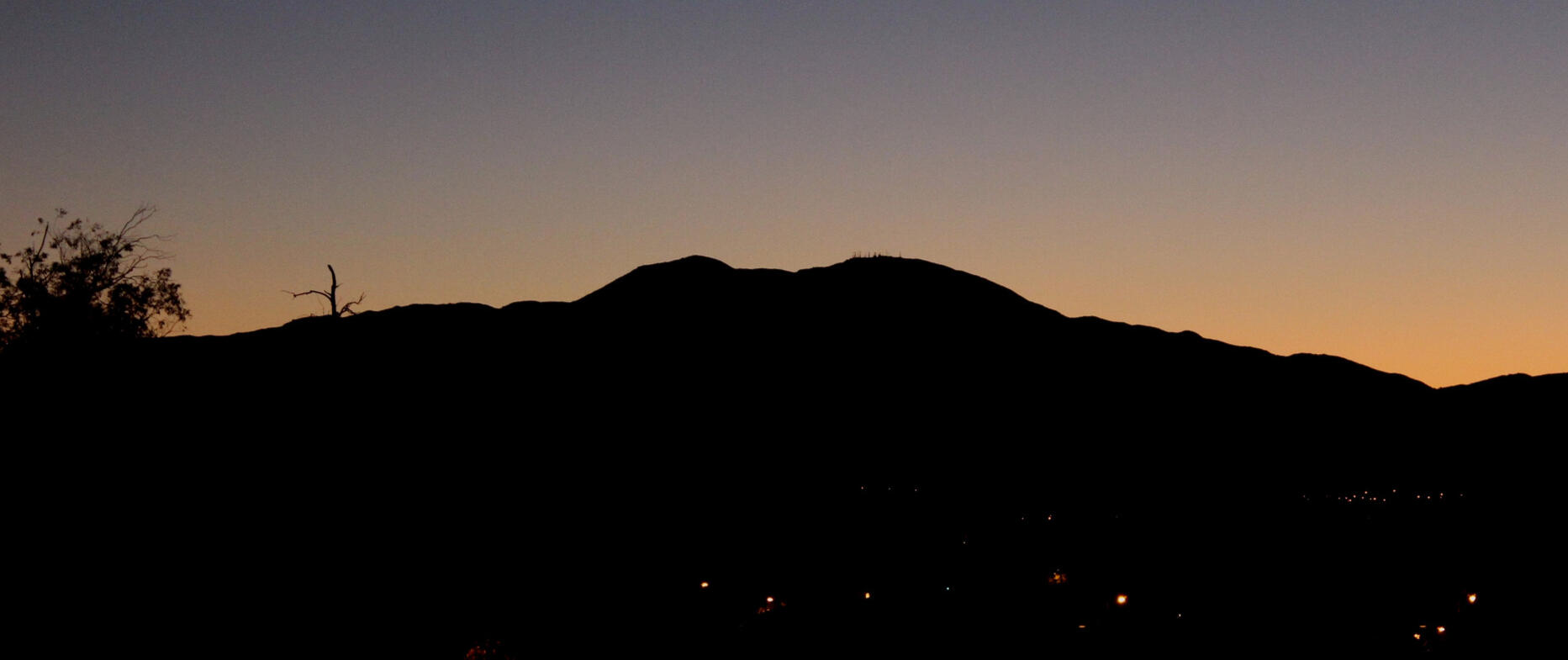
Saddleback Mountain, Orange County, California (Photo by T.S. Bremer)
Melanie and I found each other in Yellowstone National Park, where I worked a long summer of seasonal employment. Within a year, we were working as caretakers of Rancho D’Eleanora, a hundred steep acres of avocados, macadamia nuts, citrus, and just about any other fruit that one could imagine, tucked away high in the Rainbow Heights area of rural Fallbrook in San Diego County, California. The ranch was an Edenic haven, but paradise doesn’t promise much of a future for a young couple, as the First Couple of the Abrahamic traditions learned. So, like them, we left our little Eden to make our lives elsewhere, which for us meant moving to Melanie’s homeland in Ohio. We somehow were able to purchase an insurance agency in a small Ohio town, a daunting commitment for a pair of twenty-somethings who had never been to college.After a few years of insurance, Melanie began taking classes at the branch campus of The Ohio State University. We moved closer to Columbus so that she could go to school full time at the OSU main campus. A few years later, I followed Melanie’s lead to study at The Ohio State University, where I completed a degree in Religious Studies. I went directly on to an M.A. and then Ph.D. in Religion at Princeton University, where I finished in 2001. I landed a job at Rhodes College in Memphis, Tennessee, where I taught for 22 years, offering courses in American religious history, American sacred space, religion and environmental crisis, and other subjects.
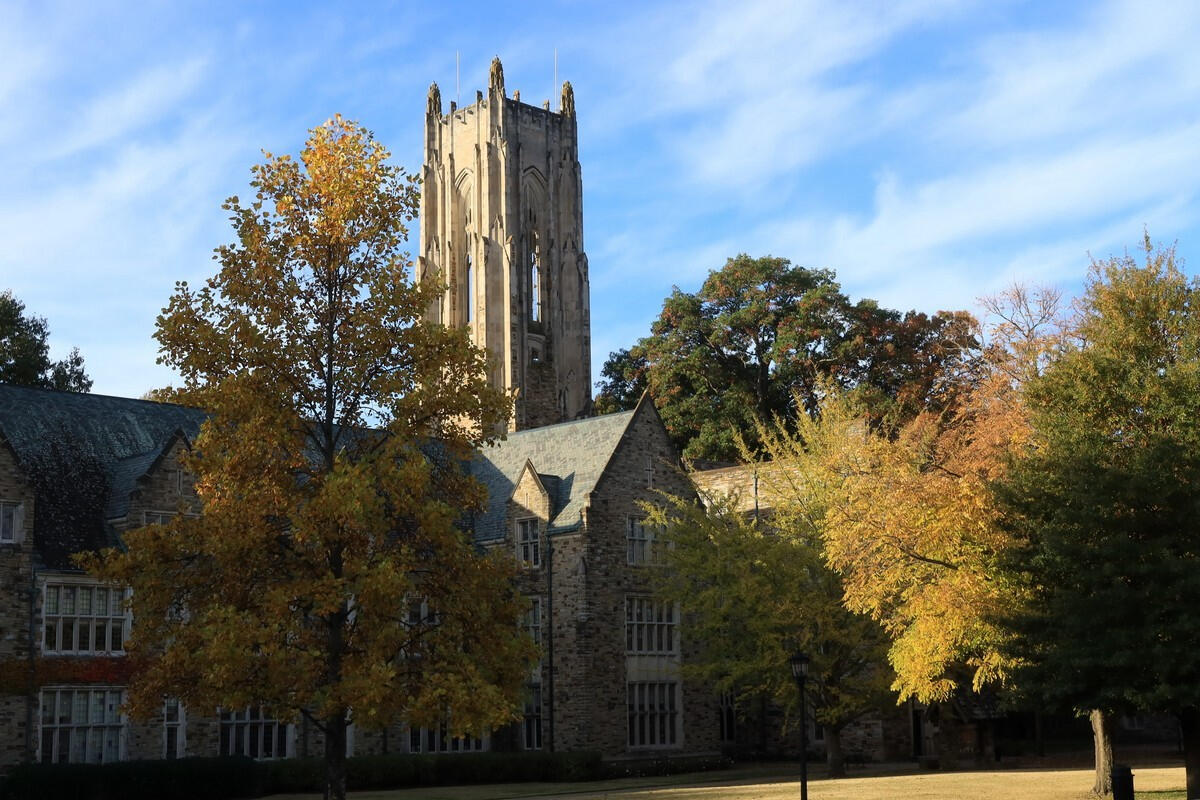
Rhodes College, Memphis, Tennessee (photo by T.S. Bremer)
Since leaving the classroom at the end of the 2023 fall semester, we moved back to central Ohio, where I occupy myself with creative activities, mostly writing, and getting outdoors. You can keep up with me by subscribing to the Sacred Wonderland Newsletter, and I welcome your comments, questions, or just a friendly hello—you can send a message from the Contact page.
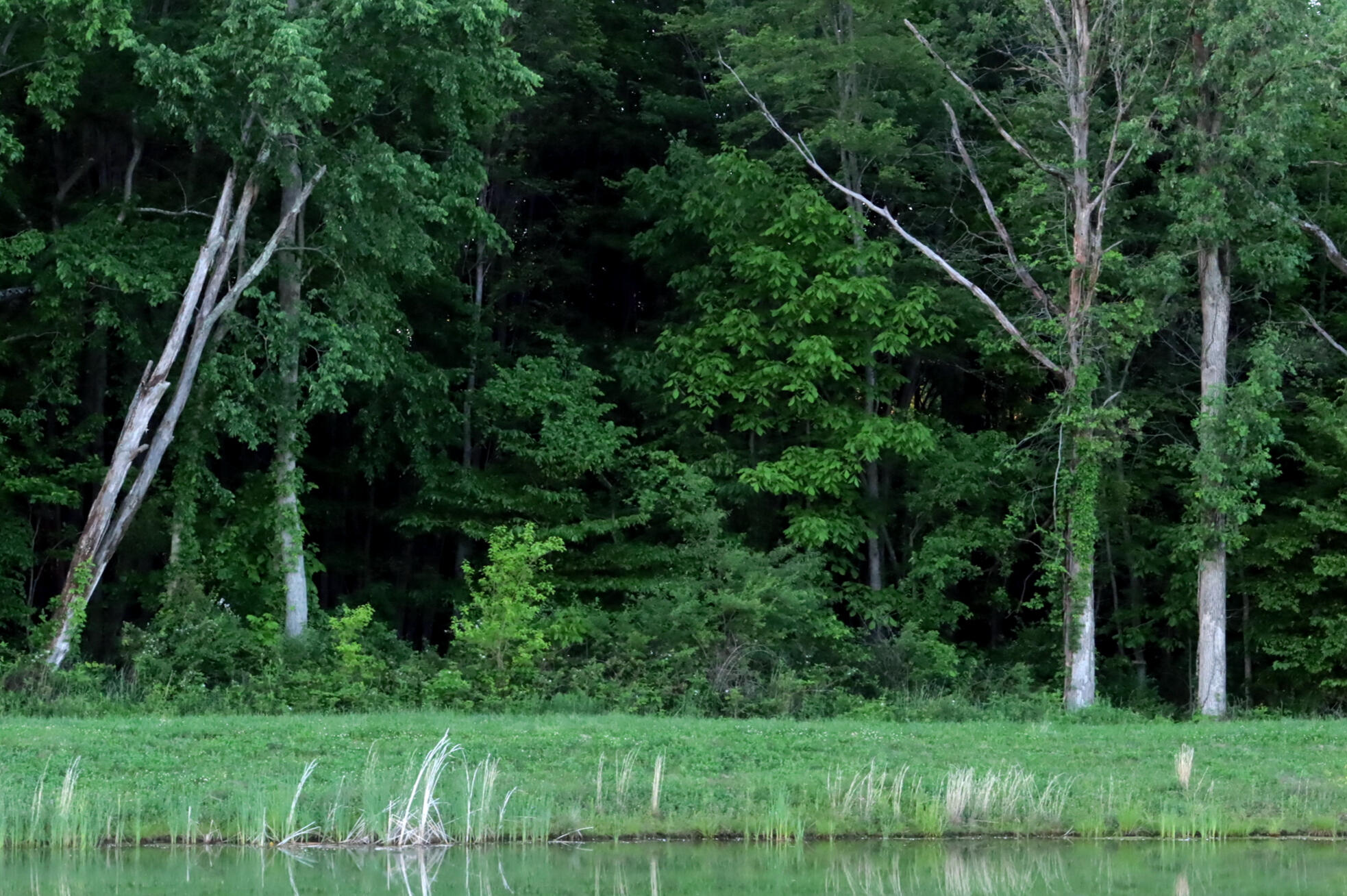
Ohio woods (photo by T.S. Bremer)
My Story as a Writer
I have worked as a landscaper, an avocado rancher, a seasonal employee in Yellowstone National Park, an insurance agent, and a college professor. But I’ve always been a writer. Early in life I wrote poems, and for a while I fancied myself a singer-songwriter.My formal academic training began when I went to college at age 35. The academy changed how I write and what I write about. American religious history was the mainstay of my professional life as a scholar and teacher. Specifically, my research evolved from an early interest in sacred space, pilgrimage, and tourism to later studies of religion in U.S. national parks.
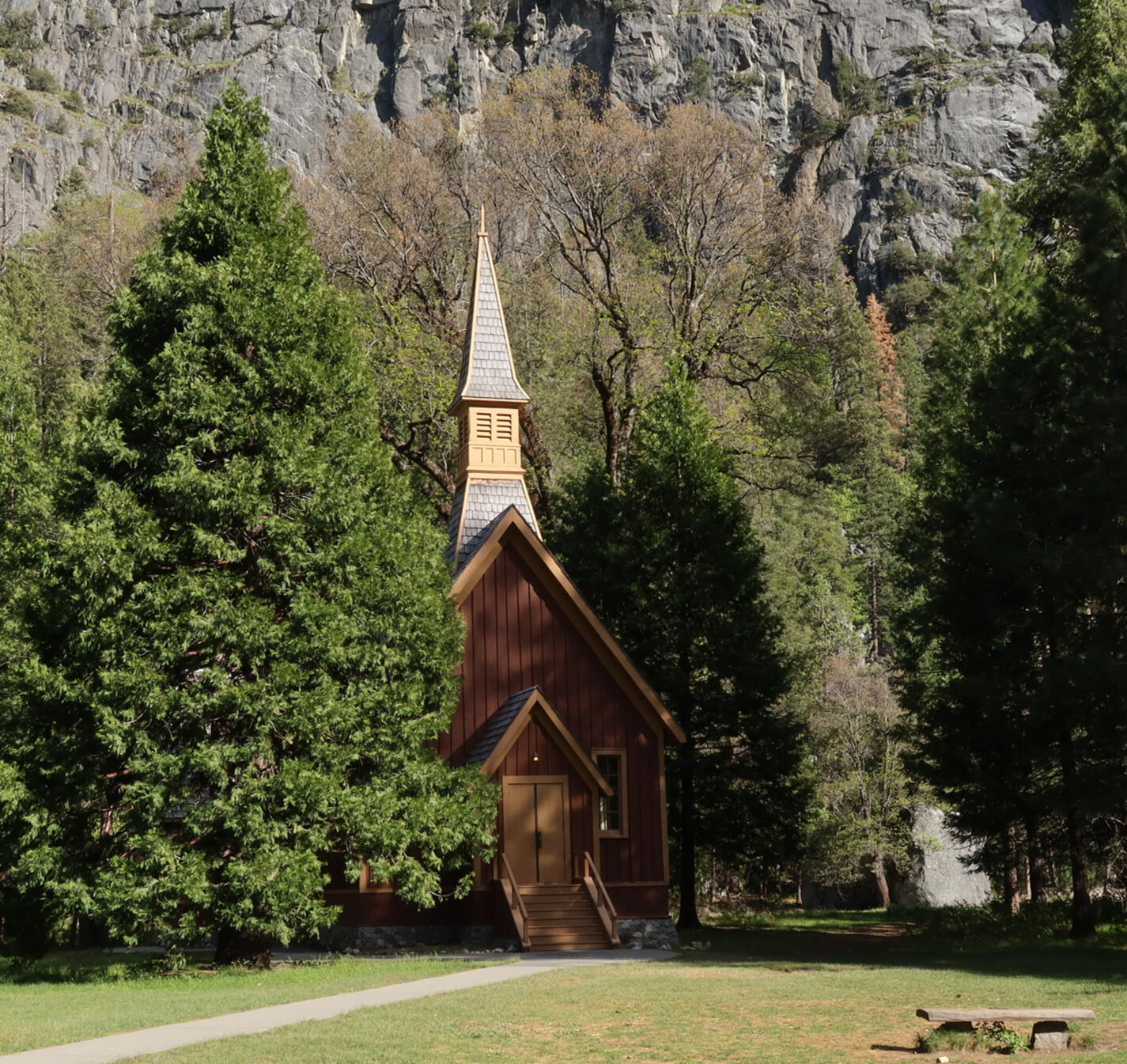
Yosemite Valley Chapel (photo by T.S. Bremer)
As a historian, I have an unwavering commitment to historical accuracy. However, academic writing constrains the author’s voice and style with disciplinary expectations of argument and the presentation of evidence. These scholarly conventions can undermine the writer’s goal to tell an engaging story.In recent years, I have worked on unlearning my academic training. I still value my knowledge of American religious history. I often rely on my expertise in religion, tourism, and national parks. But now I am more attentive to telling stories that engage readers.I’m also stretching the boundaries of what I write about. My current projects encompass a wider range of places and subjects. They include such topics as a river in the Canadian wilds, a nineteenth-century country cemetery, and a poet’s historic home.These days, I write essays that explore landscapes, both real and figurative, while reflecting on my own experiences. I tell stories of land and place, of holiness and blasphemy, of people and history. I also write poems. And though I no longer write songs, I still play the guitar.
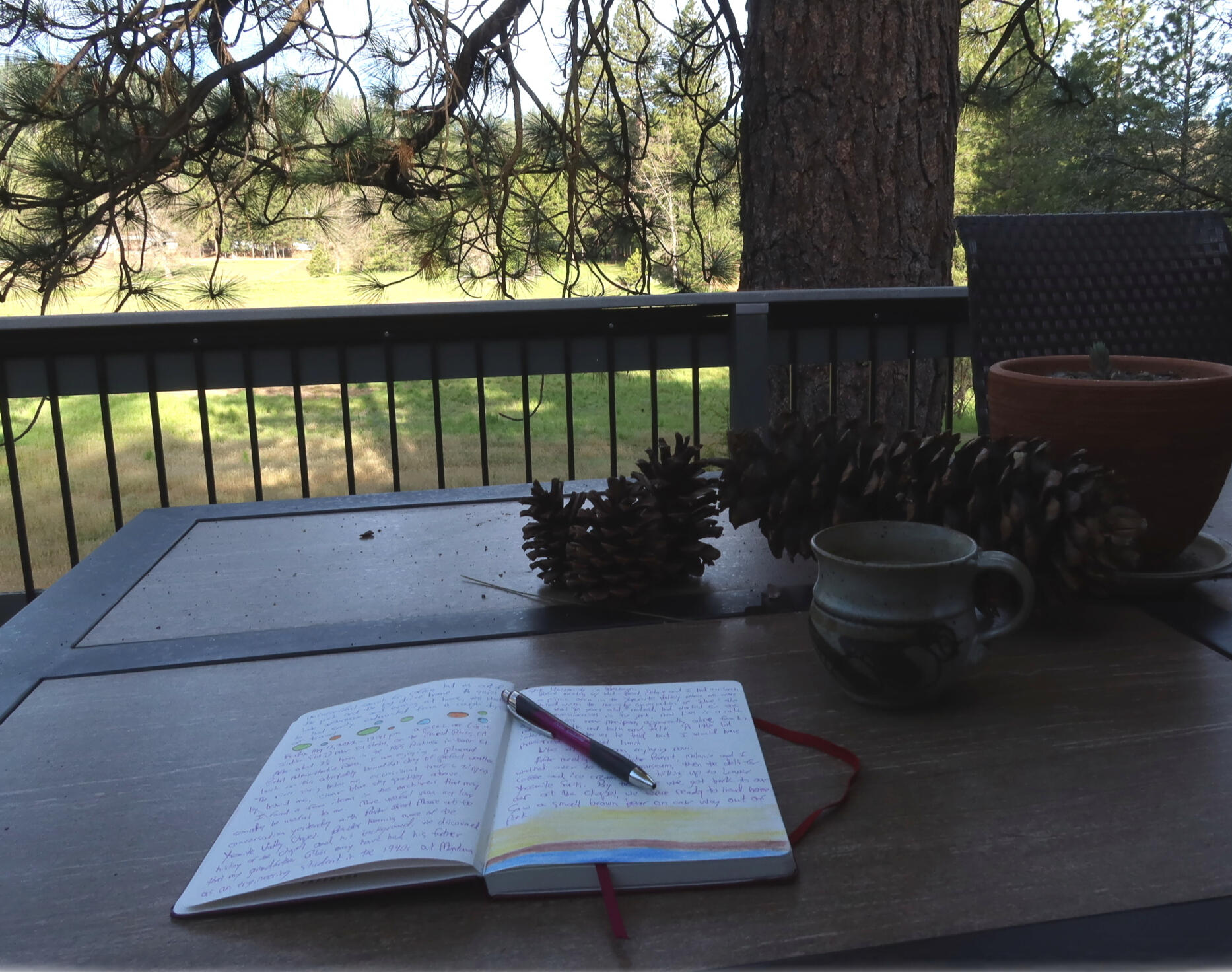
A place to write (photo by T.S. Bremer)
Contact
Do you have a question, comment, or suggestion? Do you need to request something? Get in touch by completing this form (fill in all fields):
AI Disclosure statement: I use generative artificial intelligence (AI) only for generating alternative text for images, which I subsequently edit. All other text, including image captions, is my original work.
Like many writers, I often rely on AI tools for checking grammar, spelling, and clarity in my writing, as well as assisting with research and expediting workflows. All finished writings, though, are products of my own thoughtful, creative, and experienced efforts in composing and editing the written word.
For my original images, I regularly crop them as well as adjust color and exposure manually, but I never use AI to alter the images.
Privacy Policy
Thank you for visiting my websites. I am Thomas S. “Tom” Bremer, and I maintain this site. The website addresses are https://tsbremer.com/ and https://www.sacredwonderland.us/, plus subdomains associated with these addresses.I take seriously your privacy and I collect very little data about your visits. The website is solely for informational and educational purposes—it is ad-free, and nothing is for sale on this website. Therefore, I don’t gather data for advertising purposes, nor do I need any transactional information (payment information, shipping addresses, etc.) from anyone who visits the site. Sometimes I will link to other sites that sell things or advertise, but I do not get any compensation for those links (i.e., I do not participate in any affiliate advertising programs). If you visit a site that I link to, you should consult their privacy policies.What personal data I collect and why I collect it
All websites collect some level of data, and this one is no exception. The data collected here, though, is limited to communicating with users who voluntary provide their information. The Contact form collects your name and email address in addition to your message. I use AWeber for sending newsletters to subscribers. Their subscription form asks only for your name and email address, which AWeber retains for sending email Newsletters and for tracking emails. You can read their privacy policy at https://www.aweber.com/privacy.htm.Cookies
This site may use cookies and similar technologies that are necessary for basic site operation and, where applicable, to support embedded third-party services such as analytics. These third-party services may place their own cookies, and their use is governed by their respective privacy policies. You can control cookies through your browser settings.